
Course Work BY R. A. Chaproniere
Navigation
HOMEPAGE
COURSES
 Exploring the Universe
Thu' a Small Telescope
Thu' a Large Telescope
Galaxies
Planetary Atmospheres
Planetary Geology
Modern Cosmology
Stars
Science Fiction???
PROJECTS
Essays
Observational Work
ABOUT ME
CONTACT ME 
Data Source :
Star data from the Stars web-site Graphic from the Astralia telescope web-site
Advertisement
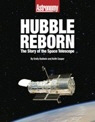 Hubble Reborn takes the reader on a journey through the Universe with spectacular full-colour pictures of galaxies, nebulae, planets and stars as seen through Hubble's eyes, along the way telling the dramatic story of the space telescope, including interviews with key scientists and astronauts.
Astonomy Now

Advertisement
John Moores University offers exciting distance learning courses in Astronomy ranging from an Introduction to Astronomy to Planetary Geology . You are sure to find something that interests you and want to know more about. If, like me, you've a lifelong interest in the subject or have been overwhelmed by the sheer beauty of the heavens then this is the place to start.
John Moores University
Assignment 4 (Energy Flow from the Sun)

To See Other Assignments in the Exploring the Universe Series: | 1 | 2 | 3 | 4 | 5 | 6 | 7 | 8 | 9 | 10 | 11 | 12 |
Energy Flow from the Sun - Continued
Q 18) Using what you have learned in this lab, explain the apparent contradiction. (~300 words)
At the heart of all main sequence stars is a nuclear reaction that fuses Hydrogen nuclei together to form Helium. This process known as The Proton - Proton Chain brings together, in three stages, 4 Hydrogen nuclei to form a Helium nucleus that also sees the release of a Neutrino, high energy Photons and two Hydrogen nuclei. With Photons safely on their way to the surface we turn our attention to what that journey is like.
The material at the centre of stars is a very high density plasma and this material seeks to impede photon progress to the surface. This imposition take three forms, Electron Scattering, Bound – Free Absorption and Free – Free Absorption.
Electron Scattering: When an electron is struck the energy of the photon is transferred in the form of vibrational or oscillating energy analogous to the ringing of a bell. This energy is re-radiated at a later stage as a photon which can be emitted in any direction.
Bound – Free Absorption: Happens when an atom is struck by a photon. The subsequent effect is that the extra energy causes it to eject an electron effectively ionising it. Again, as with electron scattering, when the atom reabsorbs an electron the surplus energy is re-radiated as a photon which can be emitted in any direction.
Free – Free Absorption: With the extremes of temperature and pressure at the core Hydrogen atoms are dissociated leaving a vast pool of free electrons which make ready targets for the high energy photons. When one of these electrons is struck it becomes more energetic this, like the other impositions, means that when it returns to its original state it re-radiates the excess energy as a photon which can be emitted in any direction.
Important: At no stage do photons physically slow from light speed. It is the extremely circuitous route they take from collision to collision that causes their slow progress.
Q 19) Line photons are responsible for the bright lines in an emission spectrum as well as the dark lines in an absorption spectrum. How can this one type of photon give rise to two strikingly different spectra? Write a one page essay carefully explaining how this is possible. Use diagrams if possible to clarify you argument. (~300 words)
Pages
<< | Previous | 1 | 2 | 3 | 4 | 5 | 6 | 7 | 8 | Next | >>