
Course Work BY R. A. Chaproniere
Navigation
HOMEPAGE
COURSES
 Exploring the Universe
Thu' a Small Telescope
Thu' a Large Telescope
Galaxies
Planetary Atmospheres
Planetary Geology
Modern Cosmology
Stars
Science Fiction???
PROJECTS
Essays
Observational Work
ABOUT ME
CONTACT ME

Course Work Completed
Assignment 1 [GoTo]
Assignment 2 [GoTo]
Assignment 3 [GoTo]
Assignment 4 [GoTo]
Assignment 5 [GoTo]
Assignment 6 [GoTo]
Assignment 7 [GoTo]
Assignment 8 [GoTo]
Assignment 9 [GoTo]
Assignment 10 [GoTo]
Assignment 11 [GoTo]
Assignment 12 [GoTo]
Advertisement
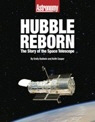 Hubble Reborn takes the reader on a journey through the Universe with spectacular full-colour pictures of galaxies, nebulae, planets and stars as seen through Hubble's eyes, along the way telling the dramatic story of the space telescope, including interviews with key scientists and astronauts.
Astonomy Now

Advertisement
John Moores University offers exciting distance learning courses in Astronomy ranging from an Introduction to Astronomy to Planetary Geology . You are sure to find something that interests you and want to know more about. If, like me, you've a lifelong interest in the subject or have been overwhelmed by the sheer beauty of the heavens then this is the place to start.
John Moores University
Planetary Geology

Planetary Geology covers the interiors and surface structure of the planets in our solar system, starting with the Earth and moving out through the terrestrial planets to the moons of the Jovian planets.
The Earth we live on is a constantly changing world - the land beneath us is being constantly eroded and re-created, by a variety of processes such as plate tectonics, volcanism, glacial erosion and weathering. Compared to the Earth, the majority of the other planetary bodies in our solar system are much less active; our Moon has remained relatively unchanged for the last three billion years. What are the factors that have led to such a difference in two bodies that formed so close together?
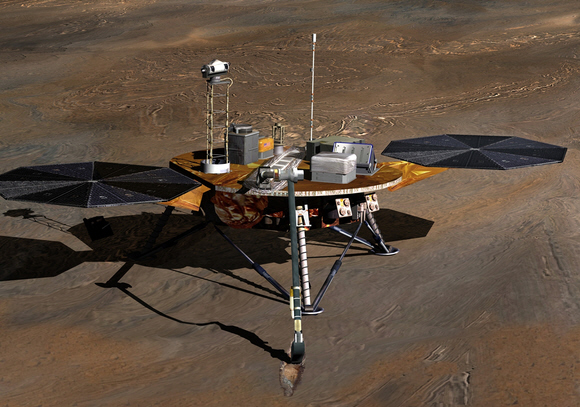 The planets Mars and Venus have their own geological processes, similar in many ways to those on Earth, but also quite different in others. The larger moons of Jupiter and Satun also have complex resurfacing processes occurring, either now or in the distant past.
In this course you will learn how the evolution of the surfaces of the worlds in our solar system has occurred, and if there are any fundamental processes that are true for all solid planetary bodies, You will study the formation and evolution of the planets and moons, and how differences in their mass and composition have led to the diverse selection of terrain that we can see throughout our solar system. The course will also allow you to become familiar with the current investigations taking place on Mars and Titan by robotic probes such as Spirit and Huygens.