
Course Work BY R. A. Chaproniere
Navigation
HOMEPAGE
COURSES
 Exploring the Universe
Thu' a Small Telescope
Thu' a Large Telescope
Galaxies
Planetary Atmospheres
Planetary Geology
Modern Cosmology
Stars
Science Fiction???
PROJECTS
Essays
Observational Work
ABOUT ME
CONTACT ME

Content Credits:
-The text from The Universe through a Small Telescope was taken from the John Moores University prospectus .
-The Moon was take from
moonpark.wordpress
-Jupiter was raken from Princeton University
-Triangulum Galaxy was taken from chandra.harvard.edu
Course Work Completed
Assignment 1 [GoTo]
Assignment 2 [GoTo]
Assignment 3 [GoTo]
Assignment 4 [GoTo]
Assignment 5 [GoTo]
Assignment 6 [GoTo]
Assignment 7 [GoTo]
Assignment 8 [GoTo]
Assignment 9 [GoTo]
Assignment 10 [GoTo]
Assignment 11 [GoTo]
Assignment 12 [GoTo]
Advertisement
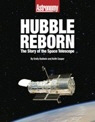 Hubble Reborn takes the reader on a journey through the Universe with spectacular full-colour pictures of galaxies, nebulae, planets and stars as seen through Hubble's eyes, along the way telling the dramatic story of the space telescope, including interviews with key scientists and astronauts.
Astonomy Now

Advertisement
John Moores University offers exciting distance learning courses in Astronomy ranging from an Introduction to Astronomy to Planetary Geology . You are sure to find something that interests you and want to know more about. If, like me, you've a lifelong interest in the subject or have been overwhelmed by the sheer beauty of the heavens then this is the place to start.
John Moores University
My Telescope: Choosing a suitable telescope can and very often is a time consuming process with not a little heartache! ........(Read More)
The Universe Through a Small Telecope

The Universe through a small telescope: is a multimedia astronomy course that uses interactive CD-ROM material, but can be supplied on paper for those without a computer. The course is primarily a practical one. You will be required to make observations using your telescope. This course will enable you to become familiar with using a small telescope to make your observations to determine the properties of celestial objects. This course also includes an audio tour of the night sky on CD.
 Introduction to Astronomy: What should you expect to see through an amateur telescope? This section details the types of telescope available (Refractors and Reflectors) and the associated advantages and disadvantages with each type. Information is also provided on testing telescope equipment for pointing accuracy and limiting resolution under different conditions. Introduction to Astronomy also covers the co-ordinate system of the celestial sphere with an introduction to positional astronomy, angular sizes and distances, time zones and details how the changing of the seasons affects what we can observe. This point of the course is accompanied by a detailed tour of the night sky to introduce beginners to the constellations and the many and varied objects of interest contained within them that are observable with a small telescope.
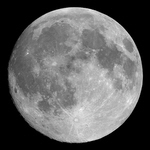
The Moon: The Earth's nearest neighbour is easily the brightest object in the night sky and one that everybody is familiar with. This section discussesthe geology and topography of the Moon and details the many theories that have arisen concerning its origin. Also included is information on the phases of the Moon and the effects of libration on what we can observe. The pactical exercise assosiated with this section involves measuring the heights of mountains on the moon from 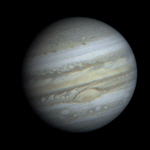 your observations. In addition this section contains information on eclipses (both solar and luna) and details observation of the Sun and what features you can expect to se e.g. flares, prominences and sunspots.
Observing the Planets: The eight other known planets in our solar system provide a and varied collection of targets for observations. This section details what you can expect to see with a small telescope. on each of the planets and their major satellites along with the best time to observe them. Information is given on how the orbits of the planets affect their visibility and discussion is given to topics such as retrograde motion and timings of favorable oppositions. The practical section of this chapter will involve using your observations of the Moons of Jupiter to calculate the planet's measuring simple physical laws. In addition this section includes information on observing asteroids and comets and details some of the meteor showers you may be able to see.
 Variable Stars: Not all of the stars in the sky have a constant brightness .There are many types of variable stars ranging from pulsating Cepheid variables to eclipsing binaries. This chapter covers the types of variable stars and gives the best examples of each type. The practical assignment involves using your observations of certain variable stars to produce light curves and thus determine the type of variable.The chapter also provides detailed information on the spectral classification and magnitude system and advice on comparing magnitudes and measuring angular separations of multiple stars.
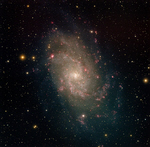
Deep Sky Objects: This section covers objects such as globular clusters, nebulae, the Milky Way and distant galaxies. Details are given on how to observe the Andromeda galaxy and what you should expect to see. The practical part of this section will involve you making your own observations of favorably positioned star clusters and nebulae such as the Hyades, Pleiades and the Orion Nebular, and comparing and classifying the objects you have seen via a multitude of criteria such as colour, nebulosity, star density and the presence of dust bands.