
Course Work BY R. A. Chaproniere
Navigation
HOMEPAGE
COURSES
 Exploring the Universe
Thu' a Small Telescope
Thu' a Large Telescope
Galaxies
Planetary Atmospheres
Planetary Geology
Modern Cosmology
Stars
Science Fiction???
PROJECTS
Essays
Observational Work
ABOUT ME
CONTACT ME

Course Work Completed
Assignment 1 [GoTo]
Assignment 2 [GoTo]
Assignment 3 [GoTo]
Assignment 4 [GoTo]
Assignment 5 [GoTo]
Assignment 6 [GoTo]
Assignment 7 [GoTo]
Assignment 8 [GoTo]
Assignment 9 [GoTo]
Assignment 10 [GoTo]
Assignment 11 [GoTo]
Assignment 12 [GoTo]
Advertisement
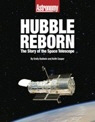 Hubble Reborn takes the reader on a journey through the Universe with spectacular full-colour pictures of galaxies, nebulae, planets and stars as seen through Hubble's eyes, along the way telling the dramatic story of the space telescope, including interviews with key scientists and astronauts.
Astonomy Now

Advertisement
John Moores University offers exciting distance learning courses in Astronomy ranging from an Introduction to Astronomy to Planetary Geology . You are sure to find something that interests you and want to know more about. If, like me, you've a lifelong interest in the subject or have been overwhelmed by the sheer beauty of the heavens then this is the place to start.
John Moores University
The Universe Through a Large Telecope

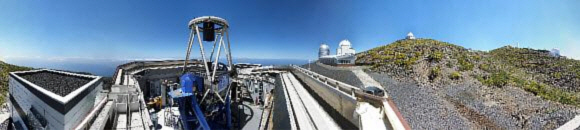
The Universe Through A Large Telescope: is a two-module course that will allow you to learn how to use the data collected from large professional telescopes. On the completion of this course you will know how to utilise the archives of scientific data from large telescopes; have learnt to analyse and filter the archived data for use in answering specific scientific questions.
Astronomical Techniques and Observations:
Types of Radiation.Cepheid Variables: What are Cepheid variables? How do they allow us to calculate the distances to other galaxies? What physical processes drive them?
Types of Telescopes.
Radio Astronomy.
Types of Detectors.
Spectroscopy and the Spectroscopic Method.
Interferometry.
Adaptive Optics.