
Course Work BY R. A. Chaproniere
Navigation
HOMEPAGE
COURSES
 Exploring the Universe
Thu' a Small Telescope
Thu' a Large Telescope
Galaxies
Planetary Atmospheres
Planetary Geology
Modern Cosmology
Stars
Science Fiction???
PROJECTS
Essays
Observational Work
ABOUT ME
CONTACT ME

Course Work Completed
Assignment 1 [GoTo] ✓
Assignment 2 [GoTo] ✓
Assignment 3 [GoTo] ✓
Assignment 4 [GoTo] ✓
Assignment 5 [GoTo] ✓
Assignment 6 [GoTo] ✓
Assignment 7 [GoTo]
Assignment 8 [GoTo]
Assignment 9 [GoTo] ✓
Assignment 10 [GoTo] ✓
Assignment 11 [GoTo]
Assignment 12 [GoTo]
Advertisement
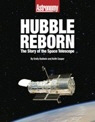 Hubble Reborn takes the reader on a journey through the Universe with spectacular full-colour pictures of galaxies, nebulae, planets and stars as seen through Hubble's eyes, along the way telling the dramatic story of the space telescope, including interviews with key scientists and astronauts.
Astonomy Now

Advertisement
John Moores University offers exciting distance learning courses in Astronomy ranging from an Introduction to Astronomy to Planetary Geology . You are sure to find something that interests you and want to know more about. If, like me, you've a lifelong interest in the subject or have been overwhelmed by the sheer beauty of the heavens then this is the place to start.
John Moores University
Exploring the Universe

Exploring the Universe: Is an introductory course and is ideally suited for beginners with an interest in all aspects of astronomy. The course consists of two modules; the first module covers the Scientific, Historical and Cultural basis for modern Astronomy and the second module covers the Wider Universe outside our solar system. The course includes an audio tour of the night sky on CD.
An outline for a typical course syllabus.
Module 1
Sense of Scale: How big is the Universe? How long has the Universe been around? What are the differences between Astrology and Astronomy? What is the value of Astronomy in Science?
A Universe of Colour: In this virtual exhibition and accompanying video Professor David Malin (Anglo-Australian Observatory) describes how the true colours of the Universe are revealed and what they mean.
Ancient Astronomy: This chapter covers the modern view of Sun-Earth-Moon system, early civilisation's view of the Universe, the Geocentric model of the Universe, Greek cosmological theory.
The birth of 'modern' Astronomy: Copernicus and the subsequent revolution in thought: Copernicus, Galileo, Kepler, Newton, and Einstein: the astronomical and technological revolutions.
The Earth in Space: This section includes the seasons, tides and phases of the Moon; eclipses, monitoring and communications satellites. Finding your way around the night sky; constellations and the motion of Planets.
Modern Observatories: Details the underground, ground and space based telescopes: professional multi-wavelength astronomy and the electro magnetic spectrum. Also includes information on the new Liverpool Robotic Telescope.
The Sun: Covers solar flares, sunspots and solar granulation along with the internal structure, composition and sol.ar corona and wind of our nearest star. Also details the solar neutrino problem and the nature of solar energy.
The Solar System: This section deals with the inner 'rocky' planets and the outer gaseous worlds; comparing and contrasting the two. Also covers asteroids, comets, and the formation and evolution of the solar system.
Module 2
Cycles of Creation: The formation of stars and planets; the types of variable stars; stellar energy sources; the creation and evolution of stars. Stellar life cycles.
Stellar Remnants: White dwarfs, neutron star sand pulsars, black holes, supernovae and dark matter candidates
Astronomical Imaging: Practical Astrophotography, light, telescopes and detectors, positional Astronomy, the magnitude system and naming conventions.
The Milky Way: Different components; chemical evolution; importance of dust: interstellar medium; galactic mass.
Extra Solar Planets: Planets around other stars; how these systems differ from ours; methods of planet detection.
Cosmology: Why is the sky dark? The Big Bang and other cosmologies; thermal background radiation; the beginning of the Universe; Formation of heavy elements; isotropy; homogeneity.
Galaxy Formation: Galaxy classification;dynamics of galaxies; gravitational lensing; black holes; inflation; quasars; the age of the Universe;missing mass; the fate of the Universe.
Search for extraterrestrial intelligence: How life might evolve on other worlds; prospects for interstellar travel; terra forming.