
Course Work BY R. A. Chaproniere
Navigation
HOMEPAGE
COURSES
 Exploring the Universe
Thu' a Small Telescope
Thu' a Large Telescope
Galaxies
Planetary Atmospheres
Planetary Geology
Modern Cosmology
Stars
Science Fiction???
PROJECTS
Essays
Observational Work
ABOUT ME
CONTACT ME 
Data Source :
Star data from the Stars web-site Graphic from the Astralia telescope web-site
Advertisement
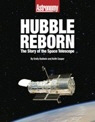 Hubble Reborn takes the reader on a journey through the Universe with spectacular full-colour pictures of galaxies, nebulae, planets and stars as seen through Hubble's eyes, along the way telling the dramatic story of the space telescope, including interviews with key scientists and astronauts.
Astonomy Now

Advertisement
John Moores University offers exciting distance learning courses in Astronomy ranging from an Introduction to Astronomy to Planetary Geology . You are sure to find something that interests you and want to know more about. If, like me, you've a lifelong interest in the subject or have been overwhelmed by the sheer beauty of the heavens then this is the place to start.
John Moores University
Assignment 3 (Exploring the Universe)

To See Other Assignments in the Exploring the Universe Series: | 1 | 2 | 3 | 4 | 5 | 6 | 7 | 8 | 9 | 10 | 11 | 12 |
The Moons of Jupiter
Question1
You should be able to decide how many lines of data are needed for each moon if you plot a
rough graph as you go along. Ideally you should have at least one full sine curve (peak to peak)
for each moon, but it is up to you to decide whether or not this is possible.

From the above animation it can be seen that as the position of a body orbiting another is measured,
when plotted against time, a sine wave is produced. This effect can also be seen when
measuring the distance of an orbiting body from it's parent when the plane of the system is seen
edge on.
Using the Jupiter Moon Rotation Laboratory software the object of this exercise is to measure the
orbits of the four main moons of the Jupiter system namely Io, Europa, Ganymede and Callisto.
When the curves for the various moons are plotted it will, using Kepler's third law of planetary motion,
be possible to determine the mass of Jupiter.
Pages
<< | 1 | 2 | 3 | 4 | 5 | 6 | 7 | Next | >>
To dowload a PDF version of this assignment click here