
Course Work BY R. A. Chaproniere
Navigation
HOMEPAGE
COURSES
 Exploring the Universe
Thu' a Small Telescope
Thu' a Large Telescope
Galaxies
Planetary Atmospheres
Planetary Geology
Modern Cosmology
Stars
Science Fiction???
PROJECTS
Essays
Observational Work
ABOUT ME
CONTACT ME

Course Work Completed
Assignment 1 [GoTo]
Assignment 2 [GoTo]
Assignment 3 [GoTo]
Assignment 4 [GoTo]
Assignment 5 [GoTo]
Assignment 6 [GoTo]
Assignment 7 [GoTo]
Assignment 8 [GoTo]
Assignment 9 [GoTo]
Assignment 10 [GoTo]
Assignment 11 [GoTo]
Assignment 12 [GoTo]
Advertisement
 Hubble Reborn takes the reader on a journey through the Universe with spectacular full-colour pictures of galaxies, nebulae, planets and stars as seen through Hubble's eyes, along the way telling the dramatic story of the space telescope, including interviews with key scientists and astronauts.
Astonomy Now

Advertisement
John Moores University offers exciting distance learning courses in Astronomy ranging from an Introduction to Astronomy to Planetary Geology . You are sure to find something that interests you and want to know more about. If, like me, you've a lifelong interest in the subject or have been overwhelmed by the sheer beauty of the heavens then this is the place to start.
John Moores University
Stars

Stars: form the basis of the observable universe, with almost all the light we see in the night sky being produced by stars, whether individual points, or the vast conglomerations of galaxies. They are also fundamental to the physics of the universe, processing the raw material of the Big Bang into the familiar elements that surround us and, indeed, make up our own bodies.
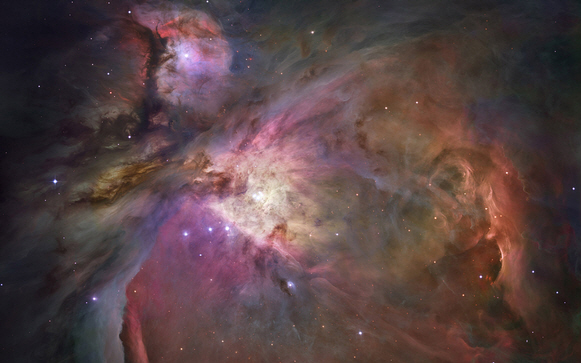 An understanding of stars is, therefore, essential to an understanding of the universe as a whole and has always been a major component of astronomy. Whether we are trying to understand our own neighbour the Sun, or delving into the mysteries of Black Holes, searching for planets orbiting around other stars or looking back at the earliest objects in the universe, astronomy is based on a core of Stellar physics.
In this course you will be guided through our understanding of stars, looking at their formation, evolution and eventual ''death'', and seeing how our knowledge has developed through observation and theory. That knowledge will also be tested using data from professional telescopes to carry out experiments that show the physics of stars in action, and allow you to draw your own conclusions. Finally, and perhaps most importantly, the gaps in our knowledge will be highlighted and explored - what are the questions that astronomers are tackling today, and how are they going about answering them?
.jpg)