
Course Work BY R. A. Chaproniere
Navigation
HOMEPAGE
COURSES
 Exploring the Universe
Thu' a Small Telescope
Thu' a Large Telescope
Galaxies
Planetary Atmospheres
Planetary Geology
Modern Cosmology
Stars
Science Fiction???
PROJECTS
Essays
Observational Work
ABOUT ME
CONTACT ME

Course Work Completed
Assignment 1 [GoTo]
Assignment 2 [GoTo]
Assignment 3 [GoTo]
Assignment 4 [GoTo]
Assignment 5 [GoTo]
Assignment 6 [GoTo]
Assignment 7 [GoTo]
Assignment 8 [GoTo]
Assignment 9 [GoTo]
Assignment 10 [GoTo]
Assignment 11 [GoTo]
Assignment 12 [GoTo]
Advertisement
 Hubble Reborn takes the reader on a journey through the Universe with spectacular full-colour pictures of galaxies, nebulae, planets and stars as seen through Hubble's eyes, along the way telling the dramatic story of the space telescope, including interviews with key scientists and astronauts.
Astonomy Now

Advertisement
John Moores University offers exciting distance learning courses in Astronomy ranging from an Introduction to Astronomy to Planetary Geology . You are sure to find something that interests you and want to know more about. If, like me, you've a lifelong interest in the subject or have been overwhelmed by the sheer beauty of the heavens then this is the place to start.
John Moores University
Modern Cosmology

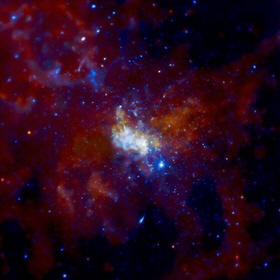 In this module we will explore some of the basic questions that human beings have been asking themselves ever since we have walked the Earth: where did we come from and where are we going? Cosmology as a subject deals with these most basic and fundamental questions - How large is the Universe? How did it begin and how will it end? How much matter is in the Universe and what form is this matter in? How is this matter distributed throughout the Universe? This course will require access to a computer running a Windows operating system.
An Introduction to Cosmology: What is Cosmology? What were the properties of the Universe at the very earliest times? Which elements and particles were created first? Which particles and elements were created during the Big Bang and how has their abundance changed over time? What was the temperature and density of the early Universe? How where the physical conditions different from those that prevail today? How are galaxies created? How early did they form in the Universe's history? Is there any evidence for evolution in the properties of galaxies from the distant, early Universe to the present day?
The Isotropic and Homogeneous Universe: What does the Universe look like? Are we in a special place in the Universe? Would the Universe look different if the Earth was in a different galaxy? Does space looks the same in every direction at every point?
Measuring Distances to the Furthest Galaxies: One of the fundamental questions in astronomy today is the determination of the distance scale in the universe. Are brighter objects brighter because they are closer, or because they are intrinsically brighter? This topic covers ranging methods such as parallax, convergent point method, standard candles and the Hubble Law amongst others.
The Material Content of the Universe: How much of the Universe can we actually see? What is the evidence for Dark Matter? Why do we think that it exists? Is there sufficient mass in the Universe to cause it to collapse or will it continue to expand to forever? How uniformly is the luminous matter distributed throughout the Universe? How much of the matter in the Universe can we see and what exotic forms could the "missing matter'' take?
The Cosmic Microwave Background Radiation: Cosmic Background Radiation is the faint echo of the Big Bang. What does this tell us about the temperature and density of the early universe? How has the expansion of the Universe affected the temperature of the Cosmic Background Radiation? How has the temperature and wavelength of the radiation changed over time, and how will it change in the future?
