
Course Work BY R. A. Chaproniere
Navigation
HOMEPAGE
COURSES
 Exploring the Universe
Thu' a Small Telescope
Thu' a Large Telescope
Galaxies
Planetary Atmospheres
Planetary Geology
Modern Cosmology
Stars
Science Fiction???
PROJECTS
Essays
Observational Work
ABOUT ME
CONTACT ME

Course Work Completed
Assignment 1 [GoTo]
Assignment 2 [GoTo]
Assignment 3 [GoTo]
Assignment 4 [GoTo]
Assignment 5 [GoTo]
Assignment 6 [GoTo]
Assignment 7 [GoTo]
Assignment 8 [GoTo]
Assignment 9 [GoTo]
Assignment 10 [GoTo]
Assignment 11 [GoTo]
Assignment 12 [GoTo]
Advertisement
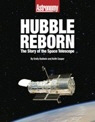 Hubble Reborn takes the reader on a journey through the Universe with spectacular full-colour pictures of galaxies, nebulae, planets and stars as seen through Hubble's eyes, along the way telling the dramatic story of the space telescope, including interviews with key scientists and astronauts.
Astonomy Now

Advertisement
John Moores University offers exciting distance learning courses in Astronomy ranging from an Introduction to Astronomy to Planetary Geology . You are sure to find something that interests you and want to know more about. If, like me, you've a lifelong interest in the subject or have been overwhelmed by the sheer beauty of the heavens then this is the place to start.
John Moores University
Planetary Atmospheres

 Planetary Atmospheres: covers the atmospheres of the planets in our solar system starting with the Earth and moving out through the terrestrial planets to the gas giants and their moons. The course also covers the new field of extra-solar planetary atmospheres - the atmospheres of planets orbiting other stars.
The Formation of the Solar System: What are the current theories concerning the formation of the solar system? What key factors determine the original make-up of a planet's atmosphere? How does a planet's atmosphere evolve over time? This part of the course is an opportunity for people who are unfamiliar with computers to learn the use of a personal computer and to become accustomed to the world wide web.
The Terrestrial Planets: Why has the Earth's atmosphere evolved so differently from the atmospheres' of Venus and Mars? What role does the presence of water play in the evolution of terrestrial atmospheres? What are the general circulation patterns for the atmospheres of the terrestrial planets? Could the atmosphere of Mars have permitted life to evolve there in the distant past? How long ago did Mars have liquid water on its surface and could there be any liquid water today? What does the atmosphere of Venus tell us about the likely consequences of global warming here on Earth? What evidence is there for ice at the poles of the Moon and Mercury and what gases constitute the tenuous atmospheres of these barren worlds?
The Jovian Planets: How are the atmospheres of the Jovian planets different to those of the terrestrial planets? What causes the giant storms and cloud belts on Jupiter? What is the origin of the famous Great Red Spot? Why are the cloud belts on Saturn less prominent than those on Jupiter? What effect does Uranus' axial tilt have on its atmospheric dynamics? Why is the atmosphere of Neptune so dynamic when it is so far from the Sun? Which of the Jovian planets has the fastest winds and why? What has the impact from comet Shoemaker-Levy 9 taught us about Jupiter's atmosphere?
Satellites of the Jovian Planets: How closely do the atmospheres of the outer planet': satellites compare to the terrestrial planets? To what degree does the atmosphere of Io depend upon volcanic emissions? What is the origin of the oxygen detected in the atmospheres of Europa and Ganymede? What lies beneath the dense atmosphere of Saturn's moon Titan and why does it have such a thick atmosphere? How similar are the atmospheres of Pluto and Triton?
Extrasolar Planets: What is the current status of searches for planets outside our solar system? How do these objects compare with expectations based on our solar system? How long is it before we expect to detect solar system analogues? What can we determine about the atmospheres of the planets discovered outside our solar system? What indicators can we use to detect whether these planets may support life? How are the atmospheres of these planets different from our own?
